















- Articles
- Why Agentic AI Is the Next Frontier for Back Office Transformation
Why Agentic AI Is the Next Frontier for Back Office Transformation

For decades, back office transformation has followed a familiar playbook. Streamline processes. Reduce manual effort. Automate repetitive tasks. Improve accuracy. The goals have remained remarkably consistent; and so, has the fundamental challenge: transformation is hard, slow, and rarely delivers its full promise.
What is different today is not the goal. It is the power of the tools now available to achieve it. Agentic AI represents a genuine step change not an incremental improvement on what came before, but a fundamentally different way of thinking about how work gets done.
Agentic AI is about action, not assistance. An agent does not wait to be asked a question — it is designed to execute, decide, and communicate outcomes.
Consider the volume and variety of work that flows through a typical back office on any given day: invoice processing, vendor queries, reconciliations, approvals, status checks, compliance verifications, exception handling. Each involves a series of steps, pulling information from one system, applying judgment, updating another system, notifying a stakeholder, escalating if needed.
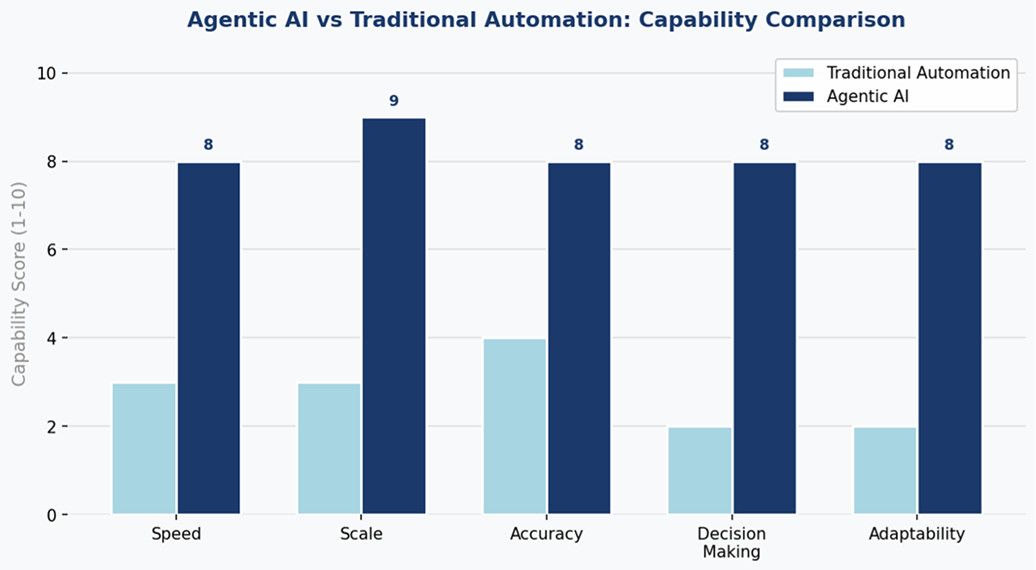
The key architectural insight is this: agents work best when they are narrow. A well-designed agent does not try to manage an entire process end to end. It handles one specific task, checking the status of an invoice, validating a payment term, flagging an anomaly and then passes the result to the next agent or to a manager agent coordinating the broader workflow.
When you architect your back office workflows around agents handling narrow, well-defined tasks, you create a system that can operate at a speed, scale, and consistency that no human team can match. Routine work gets handled automatically. Exceptions get surfaced intelligently. Your people, freed from the grind of repetitive processing, can focus on judgment-intensive work, relationship management, and strategic thinking.
The question is no longer whether Agentic AI will transform back office operations. It is whether your organization will lead that transformation or be forced to catch up.
Don't forget to share this post!