















- Articles
- The Architecture of Agentic AI: Why Design Comes Before Technology
The Architecture of Agentic AI: Why Design Comes Before Technology

There is a temptation, when any powerful new technology arrives, to start with the tool and work backwards to the problem. With Agentic AI, that instinct will cost you.
The organizations that will get the most out of Agentic AI are not the ones that deploy it fastest. They are the ones that design it most carefully. And design, in this context, means one thing above all else: getting your workflow architecture right before a single line of code is written.
Why Architecture Is Everything
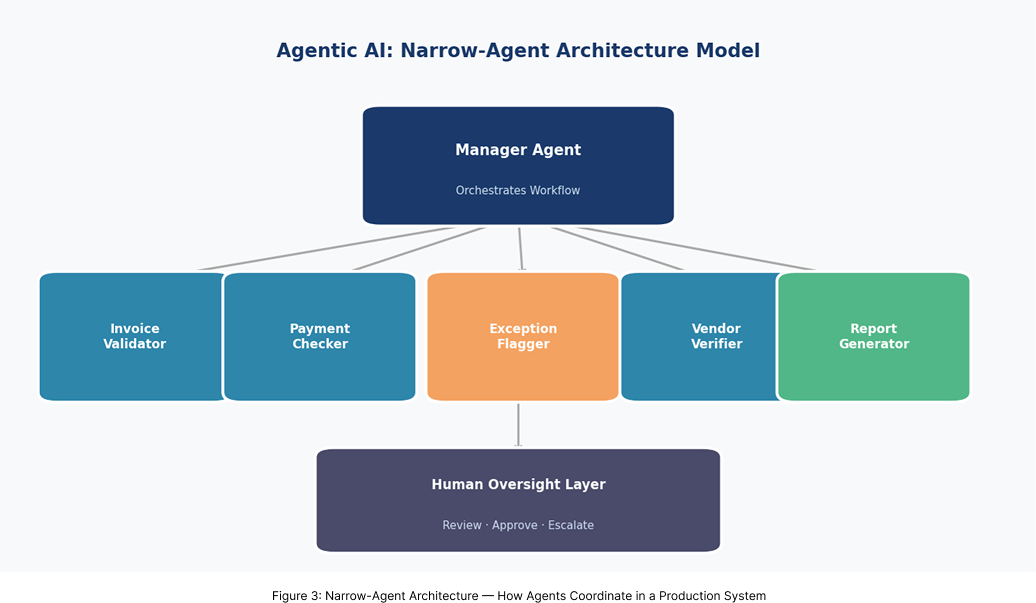
Agents are not general-purpose assistants. They are purpose-built workers. The most effective agents are narrow by design: an agent that checks the status of an invoice, an agent that validates a vendor record, an agent that flags a payment exception and routes it to the right person.
When you string together well-designed narrow agents, something powerful happens. A manager agent can coordinate their outputs, synthesize information from multiple sources, and surface decisions that would have previously required a human to spend hours pulling data together.
When agents are over-scoped, complexity explodes. Errors multiply. The system becomes difficult to monitor, trust, and fix. This is not a technology problem. It is a design problem.
What Good Architecture Looks Like in Practice
It starts with mapping your existing workflows at a level of detail most organizations have never bothered with before. Which tasks are truly repetitive and rules-based? Where do handoffs between people create delays or errors? Where does information get lost between systems?
From that map, you can identify where agents can be deployed with precision. You can define the boundaries of each agent’s responsibility clearly. You can design the communication paths between agents so that information flows reliably from one step to the next.
This upfront work is not glamorous. It does not generate demos. It does not produce anything you can show a board in the first two weeks. But it is the foundation on which everything else is built. Skip it, and you will spend far more time and money rebuilding later than you would have spent getting it right the first time.
Don't forget to share this post!